
Aerospace Materials Selection: The Complete Guide to Choosing the Right Alloys
Selecting the right materials can make or break an aerospace project. Aerospace materials selection requires balancing multiple competing demands: strength, weight, cost, manufacturability, and performance under extreme conditions. Understanding aircraft material properties enables engineers to optimize designs for safety, efficiency, and longevity while meeting stringent certification requirements.
The aerospace alloy selection process directly impacts aircraft performance, fuel efficiency, maintenance costs, and operational lifespan. As India’s first Airbus-approved investment casting foundry, Unitritech‘s expertise in aerospace materials selection helps customers navigate complex material decisions for critical components ranging from turbine blades to structural airframe parts. This comprehensive guide explores the material selection criteria aerospace engineers must consider when specifying alloys for demanding applications.
Understanding Critical Aircraft Material Properties
Successful aerospace materials selection begins with understanding fundamental aircraft material properties that determine component performance. The strength-to-weight ratio stands as the most critical metric in aerospace alloy selection, directly impacting fuel efficiency and payload capacity. Aircraft designers constantly seek materials that deliver maximum strength at minimum weight, which is why aluminum and titanium alloys dominate modern aerospace manufacturing.
Tensile and yield strength determine a material’s maximum load-bearing capacity, essential for structural components, landing gear, and engine parts. These properties vary significantly across different alloy families and must meet or exceed certification requirements set by regulatory bodies. Fatigue resistance represents another crucial consideration since aircraft experience millions of pressure cycles throughout their service life.
Poor fatigue properties can lead to catastrophic failures, making this a key factor in material selection criteria aerospace standards. Fracture toughness measures a material’s resistance to crack propagation, preventing sudden component failures that could endanger aircraft and passengers. This property becomes particularly important for pressurized structures where a small crack could rapidly expand with potentially devastating consequences.
Thermal properties also play a vital role in aerospace materials selection, especially for engine components operating above 1,500°F where materials must maintain strength while resisting creep deformation under sustained loads. Corrosion resistance cannot be overlooked since aircraft operate in harsh environments including salt spray, humidity extremes, and temperature variations. Corrosion reduces structural integrity over time and increases maintenance costs significantly.
Unitritech's Expertise in Aerospace Materials Selection
As India’s first Airbus-approved investment casting foundry, Unitritech offers comprehensive support for aerospace materials selection spanning aluminum alloys including 2024, 6061, 7075, and custom compositions, stainless steels including 17-4 PH, 15-5 PH, and 300 series grades, titanium alloys such as Ti-6Al-4V and Ti-5Al-2.5Sn, plus nickel superalloys including Inconel 718 and 625.
Our technical support includes design for manufacturability reviews that optimize parts for investment casting, material property analysis helping you select the optimal alloy for your application, solidification simulation predicting potential defects before production, and prototype development enabling testing before committing to production tooling.
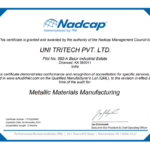
Quality assurance through AS9100 Rev D certified processes, NADCAP approved heat treatment, complete material traceability from raw material through finished components, and comprehensive testing with full documentation ensures every component meets aerospace standards.
Primary Aerospace Materials Overview
The aerospace materials selection process typically considers four major material families, each offering distinct advantages for specific applications.
Aluminum Alloys: The Aerospace Workhorse
Aluminum alloys represent the backbone of aerospace manufacturing, comprising approximately 60% of commercial aircraft weight due to their excellent strength-to-weight ratio at moderate temperatures, superior machinability, and cost-effectiveness compared to exotic alloys. The 2024 aluminum alloy, an aluminum-copper composition, delivers high strength with excellent fatigue resistance making it ideal for fuselage structures and wing skins.
The 6061 aluminum grade offers medium strength combined with excellent corrosion resistance and weldability, commonly selected for hydraulic systems and structural components where versatility matters. The 7075 aluminum represents the strongest aluminum alloy available, using zinc as its primary alloying element. This grade finds applications in aircraft wings, fuselage sections, and mobile equipment where maximum strength is required within the aluminum family.
Titanium Alloys: Premium Performance Materials
Titanium alloys provide outstanding strength-to-weight ratios at elevated temperatures while offering excellent corrosion resistance in all environments. The Ti-6Al-4V grade, also known as Grade 5, represents the most widely used titanium alloy accounting for 50% of global titanium production. This alloy delivers an excellent balance of strength, weight, and cost with operating temperatures up to 600°F.
The higher cost of titanium compared to aluminum is justified when operating temperatures exceed 300°F, when severe corrosion environments exist, or when maximum strength at minimum weight becomes paramount. Engine components including compressor blades, discs, and casings typically use titanium alloys, as do landing gear components requiring exceptional strength and fasteners exposed to harsh conditions.
Stainless Steels: Strength and Durability
Stainless steels bring excellent corrosion and oxidation resistance combined with high strength at moderate cost, though their higher density compared to aluminum or titanium limits applications where weight is critical. The 17-4 PH stainless steel, a precipitation-hardening martensitic grade, achieves strengths exceeding 190 ksi while maintaining good corrosion resistance.
These excellent aircraft material properties make 17-4 PH ideal for landing gear components, and its ability to be heat-treated to various strength levels provides design flexibility. The 15-5 PH stainless offers similar strength to 17-4 PH but with better toughness and superior transverse properties, making it particularly popular in aerospace alloy selection for complex investment cast components.
Nickel-Based Superalloys: Extreme Temperature Solutions
Nickel-based superalloys deliver exceptional high-temperature strength exceeding 2,000°F with outstanding creep and oxidation resistance. Inconel 718 represents the most widely used superalloy in aerospace applications, maintaining excellent strength up to 1,300°F while offering good weldability and fabricability. This combination of properties makes it critical in aerospace materials selection for turbine blades, combustor components, and high-pressure turbine discs where materials must perform reliably at extreme temperatures.


Material Selection Criteria Aerospace Engineers Must Evaluate
Effective aerospace materials selection requires systematic evaluation of multiple interconnected factors. Performance requirements form the foundation, beginning with the operating environment including temperature ranges from cryogenic to extreme heat, pressure conditions, chemical exposure, and UV radiation effects.
Mechanical loading considerations encompass whether components face static loads or cyclic fatigue, required impact resistance, vibration exposure, and stress concentrations inherent in the design. Service life expectations profoundly influence material choices since commercial aircraft typically operate for 20-30 years. Engineers must consider inspection intervals and component accessibility, expected maintenance requirements, and replacement costs including logistics.
Manufacturing considerations significantly impact material selection criteria aerospace applications require. Castability affects whether investment casting can produce the desired geometry with acceptable quality. Machinability influences CNC machining time and tool costs. Weldability determines joining options for fabricated assemblies. Each manufacturing process imposes its own constraints and opportunities that must align with the selected material.
Cost factors extend beyond raw material prices to encompass manufacturing complexity, labor requirements, tooling needs, and production volume economics. A titanium component might cost more in material but save money overall through reduced machining time, lighter weight improving fuel efficiency, and extended service life reducing replacements. Total lifecycle cost analysis provides the most accurate comparison between material alternatives.
Regulatory and Certification Requirements
The aerospace alloy selection process must satisfy stringent regulatory requirements that ensure safety and reliability throughout an aircraft’s operational life.
Material Specifications and Standards:
- AMS (Aerospace Material Specifications) compliance for chemical composition and properties
- ASTM standards conformance for testing procedures and acceptance criteria
- Military specifications (MIL-SPEC) where applicable for defense applications
- OEM-specific requirements from Boeing, Airbus, and other manufacturers
- International standards harmonization for global supply chains
Testing and Documentation Requirements:
- Material test reports (MTRs) verifying chemical composition and mechanical properties
- Complete traceability from raw material through finished component
- First article inspection reports for new components or processes
- Ongoing quality control testing per approved sampling plans
- Environmental testing to verify performance under service conditions
All materials used in aerospace components must maintain complete traceability. This means every bar of aluminum, titanium billet, or superalloy ingot carries documentation showing its origin, processing history, and verified properties. This traceability extends through manufacturing, allowing any component to be traced back to its source material if quality issues arise in service.
Practical Decision Framework for Aerospace Alloy Selection
Unitritech recommends this systematic approach for effective aerospace materials selection that balances performance, manufacturing, and economic considerations.
Start by clearly defining component requirements including operating temperature range, strength and stiffness needs, weight constraints, corrosion environment, and expected service life. Document these requirements precisely to enable objective material comparison. Vague requirements lead to suboptimal material choices that compromise performance or increase costs unnecessarily.
Next, identify candidate materials that meet basic requirements. Focus initially on proven aerospace materials with established track records rather than experimental alloys unless specific advantages justify the risk. Consider both ferrous and non-ferrous options, evaluate different alloy families, and maintain awareness of emerging materials that might offer advantages.
Conduct detailed evaluation comparing aircraft material properties quantitatively using material property databases and supplier data sheets. Assess manufacturing feasibility by consulting with foundries or machine shops about challenges with specific materials. Calculate total lifecycle costs including material, manufacturing, assembly, maintenance, and eventual disposal or recycling.
Review certification requirements early in the process since some materials may require extensive qualification testing. Verify that material suppliers can provide required certifications and documentation. Consider lead times for both initial qualification and ongoing production supply.
Prototype testing with selected materials validates theoretical analysis. Test prototypes under realistic operating conditions to verify performance. Conduct accelerated life testing to identify potential failure modes. Use results to refine material selection or component design before committing to production.
Frequently Asked Questions
The most critical aircraft material properties include strength-to-weight ratio, fatigue resistance, corrosion resistance, and high-temperature performance. The material selection criteria aerospace engineers prioritize depend on specific component applications—engine parts need heat resistance while structural components prioritize strength and weight.
Aerospace materials selection demands stricter safety margins, complete material traceability, extensive testing, and certification compliance. Aircraft material properties must perform reliably under extreme conditions for decades while meeting weight constraints that directly impact fuel efficiency and operational costs.
Aerospace alloy selection for investment casting considers castability, solidification characteristics, heat treatment response, and final mechanical properties. The material selection criteria aerospace foundries evaluate include dimensional accuracy achievable, surface finish quality, and ability to meet AMS specifications through the casting process.
Titanium offers superior strength-to-weight ratio at elevated temperatures, better corrosion resistance, and higher fatigue strength than aluminum. Aerospace materials selection chooses titanium when operating temperatures exceed 300°F, when corrosion is severe, or when maximum strength at minimum weight justifies the higher material cost.
Effective material selection criteria aerospace engineers use involves total lifecycle cost analysis, not just material price. Consider manufacturing costs, maintenance requirements, fuel savings from weight reduction, and service life. Sometimes expensive materials like titanium provide lower total cost through extended service life and reduced maintenance.
Material certification is mandatory in aerospace alloy selection. All materials must meet AMS specifications, have documented chemical composition and mechanical properties, and maintain complete traceability. Aircraft material properties must be verified through testing, with documentation maintained throughout the component’s service life.
Conclusion
Successful aerospace materials selection requires comprehensive understanding of aircraft material properties, systematic evaluation using material selection criteria aerospace standards, and expert knowledge of manufacturing processes. The aerospace alloy selection process balances performance, cost, manufacturability, and certification requirements to optimize component design for safety, efficiency, and reliability.
Unitritech’s expertise in investment casting across aluminum, stainless steel, titanium, and superalloys, combined with AS9100 certification and Airbus approval, makes us an ideal partner for your aerospace component development. Our engineering team provides expert guidance in aerospace materials selection, helping optimize your designs for performance and manufacturability.
Ready to optimize your component materials? Contact our materials engineering team for expert consultation on aerospace alloy selection for your next project.
Expert Material Selection Guidance for Your Aerospace Components
Partner with India’s leading AS9100-certified foundry for expert aerospace materials selection support. Our engineering team provides DFM reviews, material recommendations, and complete manufacturing solutions.