Non-Destructive Testing in Casting: X-Ray, FPI and UT Methods Explained
Non-destructive testing in casting is the critical quality gate that separates precision castings fit for aerospace, defence, and medical use from those containing hidden defects that could cause in-service failure. Unlike destructive testing, NDT methods verify casting integrity without sacrificing the component – making 100% inspection of every aerospace casting economically and practically feasible.
At Uni Tritech – India’s NADCAP-certified investment casting foundry approved by Airbus and Collins Aerospace – our NDT laboratory performs X-ray radiographic inspection, fluorescent penetrant inspection (FPI), and ultrasonic testing (UT) on every qualifying aerospace casting. This guide explains each method, what defects it detects, and how NADCAP accreditation ensures NDT reliability.
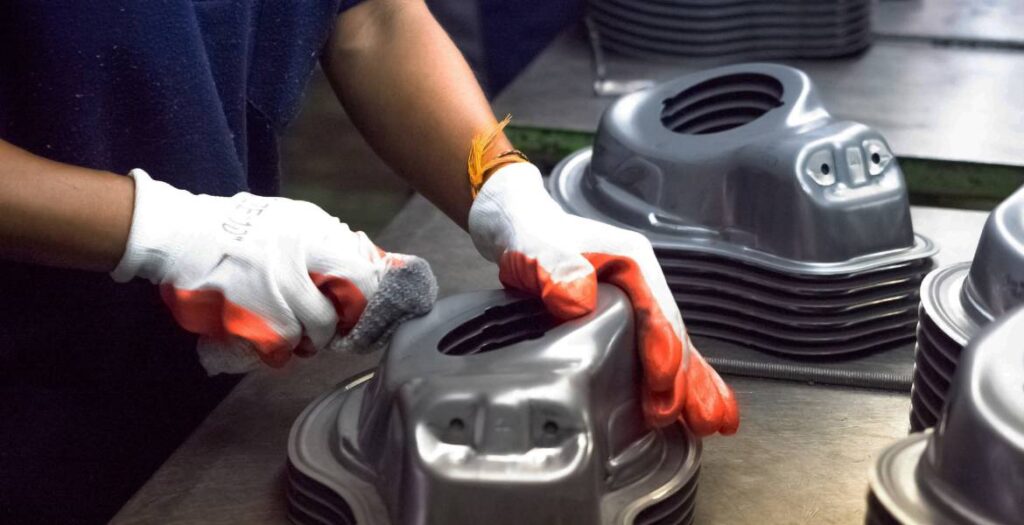
Why Non-Destructive Testing in Casting Is Non-Negotiable
Investment casting produces complex geometries with internal cavities, thin walls, and varying cross-sections – all conditions that create opportunities for internal defects invisible to the naked eye. Porosity, shrinkage, inclusions, cold shuts, and hot tears can all be present in a casting that looks perfect on the outside but will fail prematurely under structural load or pressure cycling.
For aerospace, defence, and medical applications, the consequences of undetected casting defects are catastrophic – in-flight failures, weapon system malfunctions, or patient harm. This is why aerospace procurement standards mandate non-destructive testing in casting for all fracture-critical components, and why NADCAP accreditation of NDT processes is a prerequisite for supplying to Airbus, Boeing, Safran, HAL, and other global primes.
Uni Tritech’s NADCAP-accredited NDT laboratory is staffed by Level II and Level III certified inspectors operating calibrated equipment, validated procedures, and documented acceptance criteria – ensuring every casting meets the exact NDT requirements of your aerospace programme specification.
X-Ray Radiographic Testing: Detecting Internal Defects
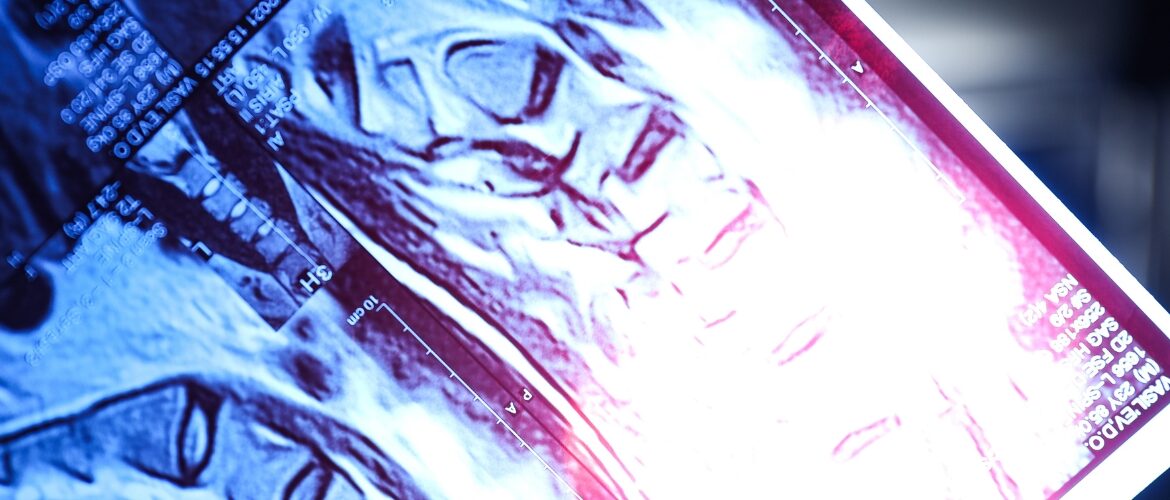
X-ray radiographic inspection is the primary non-destructive testing method for detecting internal defects in investment castings. X-rays penetrate the casting and create an image on a digital detector (DR) or film – with defects appearing as density variations corresponding to voids, inclusions, or structural discontinuities within the casting wall.
What X-Ray NDT Detects in Castings:
- Porosity: gas porosity (rounded voids from trapped gas) and shrinkage porosity (irregular voids from solidification contraction).
- Shrinkage: macro-shrinkage (large voids in thick sections) and micro-shrinkage (dendritic shrinkage at grain boundaries).
- Inclusions: ceramic shell inclusions, slag, oxide films, and foreign material entrapped during pouring.
- Cold shuts: incomplete fusion between two metal streams meeting without fully bonding during filling.
- Hot tears: solidification cracking in thick sections or constrained geometries where solidification stress exceeds local strength.
X-Ray NDT Standards for Investment Castings:
- ASTM E1030: standard test method for radiographic examination of metallic castings.
- ASTM E155: reference radiographs for aluminium and magnesium castings - graded category acceptance criteria.
- ASTM E192: reference radiographs for investment cast superalloy castings used in aerospace applications.
- MIL-STD-2175: US military casting inspection requirements covering radiographic acceptance levels for defence castings.
Digital radiography (DR) at Uni Tritech produces immediate, high-resolution images that can be digitally processed, stored, and transmitted to customers for disposition – removing film processing delays and providing permanent traceable records of NDT results for every casting.
Fluorescent Penetrant Inspection (FPI): Finding Surface Defects
Fluorescent penetrant inspection (FPI) is the most sensitive non-destructive testing method for detecting surface and near-surface defects in casting – detecting cracks, laps, cold shuts, and pores that open at the surface. FPI works by applying a fluorescent liquid penetrant that is drawn into surface-breaking defects by capillary action, then revealed under UV light after developer application.
FPI Process Steps (ASTM E1417):
- Pre-cleaning: castings are cleaned to remove all oil, grease, scale, and surface contamination that could mask defects or block penetrant entry.
- Penetrant application: fluorescent penetrant is applied by spray, brush, or immersion and allowed to dwell for the specified time (typically 10–30 minutes for castings).
- Excess removal: excess surface penetrant is removed with water spray or solvent without washing out penetrant trapped in defects.
- Developer application: dry or wet developer is applied to draw penetrant from defects to the surface, creating visible indications.
- UV inspection: castings are inspected under UV (black) light in a darkened inspection booth - defects glow bright fluorescent green/yellow.
- Post-cleaning: accepted castings are cleaned to remove all penetrant and developer residues before proceeding to further processing.
What FPI Detects (and Does Not Detect):
- FPI detects: surface-breaking cracks, laps, cold shuts, porosity open to surface, and hot tears reaching the casting surface.
- FPI cannot detect: sub-surface or internal defects - X-ray or UT are required for sub-surface discontinuity detection.
- FPI sensitivity: Type 1 fluorescent penetrant (Sensitivity Level 4) achieves defect detection capability down to approximately 0.001 inch (0.025 mm) opening width.
Ultrasonic Testing (UT): Sub-Surface Defect Detection
Ultrasonic testing is the third major non-destructive testing in casting method – using high-frequency sound waves to detect sub-surface defects in castings that are not accessible to X-ray (very thick sections) or not detectable by FPI (fully sub-surface defects). UT is particularly valuable for wrought and machined casting billet inspection but is also applied to investment castings with appropriate accessibility.
How UT Works for Casting Inspection:
- A-scan UT: single-element transducer sends a sound pulse and measures the reflected echo - identifying defect depth and size. Standard for casting billet inspection.
- Phased array UT (PAUT): electronically steered beam covers larger areas with better defect characterisation - used on complex casting geometries where standard UT is limited.
- Time-of-flight diffraction (TOFD): high-accuracy sizing method used on heavy section castings in pressure vessel and subsea applications.
UT Standards for Casting:
- ASTM E2375: standard practice for ultrasonic testing of wrought products - applicable to machined casting bar stock.
- AMS 2631: ultrasonic inspection of aluminium and aluminium alloy bar, billet, and plate used in aerospace applications.
- EN 12680: European standard for UT of steel castings covering equipment calibration, scanning, and acceptance criteria.
NADCAP NDT Accreditation: Why It Matters
NADCAP (National Aerospace and Defense Contractors Accreditation Program) NDT accreditation is the aerospace industry’s highest recognition of non-destructive testing process reliability. NADCAP accreditation requires a detailed audit of NDT procedures, equipment calibration records, inspector certification, and quality system documentation – conducted by the Performance Review Institute (PRI) on behalf of aerospace primes including Airbus, Boeing, Safran, and HAL.
- Procedure qualification: every NDT procedure at Uni Tritech is written, approved by a Level III inspector, and qualified on representative test pieces.
- Equipment calibration: all NDT equipment is calibrated to traceable standards on documented calibration schedules aligned to NADCAP requirements.
- Inspector certification: all NDT inspectors certified to NAS 410 (Level II minimum) with continuing education and recertification requirements.
- Process control: NADCAP audit verifies that NDT processes are controlled, documented, and consistently executed for every casting.
Uni Tritech’s NADCAP NDT accreditation means our X-ray, FPI, and UT results are accepted without re-inspection by Airbus, Collins Aerospace, Safran, and HAL procurement teams – dramatically reducing customer incoming inspection cost and lead time.
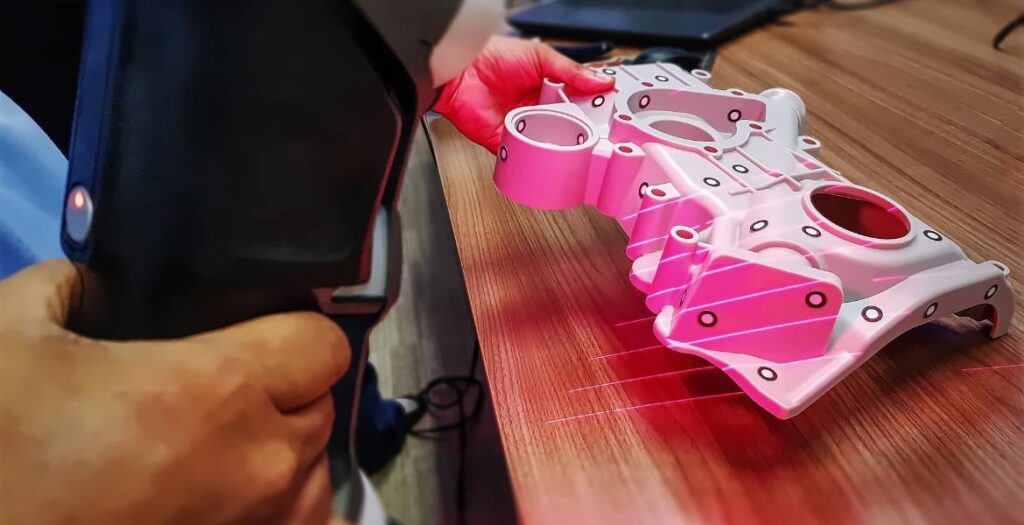
Selecting the Right NDT Method for Your Casting
The choice of non-destructive testing method depends on the defect types of concern, casting geometry, alloy, and the NDT requirements specified in your engineering drawing or programme specification:
- X-ray radiography: first choice for internal defect detection - porosity, shrinkage, inclusions - in investment castings with wall thickness up to 100 mm.
- FPI: mandatory for surface defect detection on all aerospace investment castings; use in combination with X-ray for comprehensive inspection.
- UT: select for thick sections inaccessible to X-ray, or for machined billet inspection where internal laminations or inclusions are of concern.
- Combine methods: for fracture-critical aerospace castings, combine X-ray + FPI as standard; add UT for heavy-section or high-consequence components.
Frequently Asked Questions
Non-destructive testing in casting is inspection of cast components for defects – porosity, cracks, inclusions – using X-ray, FPI, or UT without damaging or destroying the part being inspected.
X-ray inspection detects internal casting defects: gas porosity, shrinkage porosity, oxide inclusions, cold shuts, and hot tears – defects invisible externally but potentially causing structural failure in service.
FPI (Fluorescent Penetrant Inspection) detects surface-breaking cracks, laps, and porosity in castings. Fluorescent penetrant enters defects and glows under UV light, revealing surface discontinuities to ASTM E1417 standard.
Yes. Uni Tritech holds NADCAP accreditation for Non-Destructive Testing – covering X-ray radiography and fluorescent penetrant inspection. Our NADCAP NDT status is accepted by Airbus, Collins Aerospace, Safran, and HAL.
Aerospace investment casting NDT standards include ASTM E1030 (X-ray), ASTM E192 (superalloy radiographs), ASTM E1417 (FPI), and ASTM E2375 (UT) – along with prime-specific NDT specifications and NADCAP requirements.
No. Ultrasonic testing and X-ray detect different defect types and suit different geometries. X-ray is preferred for internal voids in castings; UT adds value for thick sections and billet inspection.
NADCAP NDT accreditation means customers accept Uni Tritech NDT results without re-inspection, reducing incoming quality cost. It also confirms NDT procedures, equipment, and inspectors meet aerospace prime contractor requirements.
Require NADCAP-certified NDT for your aerospace investment castings?
Uni Tritech’s accredited X-ray, FPI, and UT team ensures zero defects reach your assembly. Contact us for a casting NDT consultation.