Additive Manufacturing vs Investment Casting: 2026 Guide
Additive manufacturing vs investment casting is one of the most common process questions engineers ask. At Uni Tritech, India’s NADCAP-certified foundry, we help OEMs weigh additive manufacturing vs investment casting for each part and volume.
This guide compares the two on cost, finish, and volume, and shows when each wins. See our investment casting process page and this additive manufacturing reference.
What Is the Difference in Additive Manufacturing vs Investment Casting?
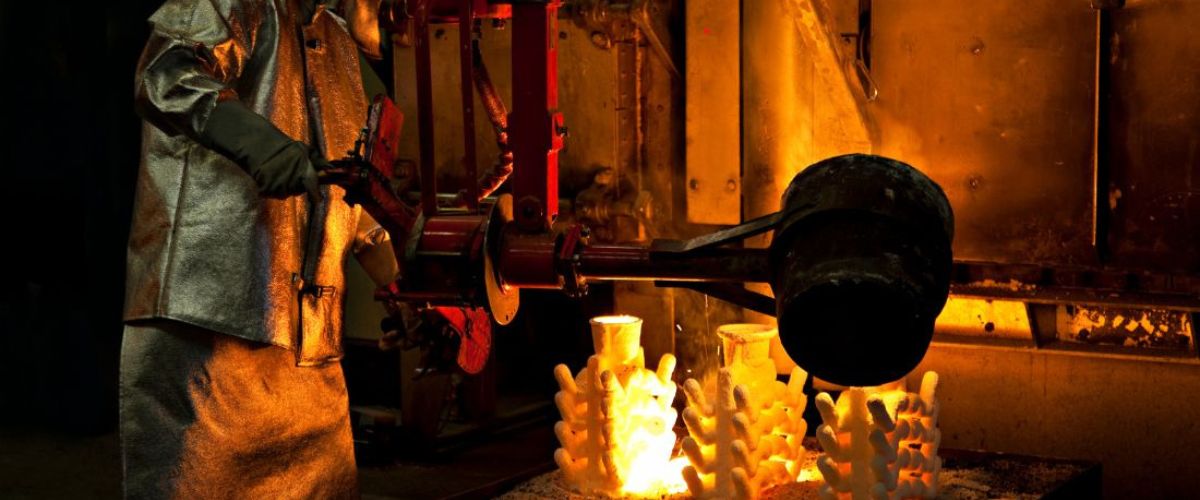
In additive manufacturing vs investment casting, additive builds a part layer by layer from metal powder, while investment casting pours molten metal into a ceramic shell. Each suits very different volumes, costs, and finishes.
Quick Summary
This guide explains additive manufacturing vs investment casting: the materials, process, tolerances and quality controls that matter. Uni Tritech is India's Airbus-approved, NADCAP-certified foundry serving aerospace, defence and medical OEMs globally.
3D Printing vs Casting Metal Parts
3D printing vs casting metal parts is mainly a trade of flexibility against cost. 3D printing vs casting metal parts favours printing for complex one-offs, and favours casting for smooth, repeatable parts at production volume.
How they compare:
Tooling: printing needs none; casting needs a wax die.
Finish: casting gives smoother surfaces with less rework.
Alloys: casting covers a far wider, qualified alloy range.
Complexity: printing enables lattices and internal channels.
Speed: printing wins for one-offs; casting wins at volume.
When to Use Casting Over 3D Printing
Knowing when to use casting over 3D printing saves cost and time. The rule for when to use casting over 3D printing is simple: as soon as volume, surface finish, or qualified alloys matter, investment casting usually wins.
Production volumes where per-part cost must drop.
Parts needing smooth as-cast surface finish.
Qualified aerospace alloys with proven properties.
Large or thin-wall near-net-shape components.
Metal AM vs Casting Cost
Metal AM vs casting cost flips with volume. In metal AM vs casting cost terms, printing wins at very low quantities because there is no tooling, but casting becomes far cheaper per part once volume spreads the die cost.
It depends on volume. For one-offs and very complex geometry, print it. For production volume, smooth finish, or qualified alloys, investment casting is usually the better choice.
Yes. In metal AM vs casting cost terms, casting becomes far cheaper per part once volume spreads the wax die cost, while printing stays costly per part at scale.
Metal AM faces higher per-part cost at volume, size limits, surface finish needs, a narrower qualified alloy range, and possible anisotropy compared with casting.
Yes. A popular route is to 3D print the wax pattern, then investment cast the part, getting fast iteration plus casting’s finish, alloys, and cost at volume.
Uni Tritech offers 3D printed patterns and full investment casting, so we recommend the right route for your part in any additive manufacturing vs investment casting decision.
Still weighing additive manufacturing vs investment casting? Uni Tritech helps you pick the right route and delivers NADCAP-certified castings with full traceability. Contact our team today.
Need help choosing in additive manufacturing vs investment casting?
Uni Tritech advises on the best route and casts production parts for aerospace, defence, space, and energy. Talk to us about your project today.