Investment Casting vs Sand Casting: A Technical Comparison for Engineers
Investment casting vs sand casting is the foundational process selection decision for any engineer specifying a metal component. Choose incorrectly and you overpay for capability you don’t need, or worse – you specify a process that cannot deliver the dimensional accuracy, surface finish, or alloy capability your component requires. The two processes serve different engineering needs, at different cost points, for different production volumes.
At Uni Tritech – India’s NADCAP-certified precision casting manufacturer – we produce investment castings for the most demanding aerospace, defence, medical, and space applications. We are frequently asked by engineers migrating from sand casting to precision casting to explain the trade-offs. This complete technical comparison answers that question definitively.
Investment Casting vs Sand Casting: Process Overview
Before comparing technical parameters, it is important to understand the fundamental process difference that drives every downstream comparison:
Investment Casting (Lost Wax Process):
- Pattern: precision wax pattern produced in a metal die - exact replica of the finished part including all surface features.
- Mold: ceramic shell built around the wax pattern by repeated dipping in refractory slurry - produces a one-use, high-accuracy mold.
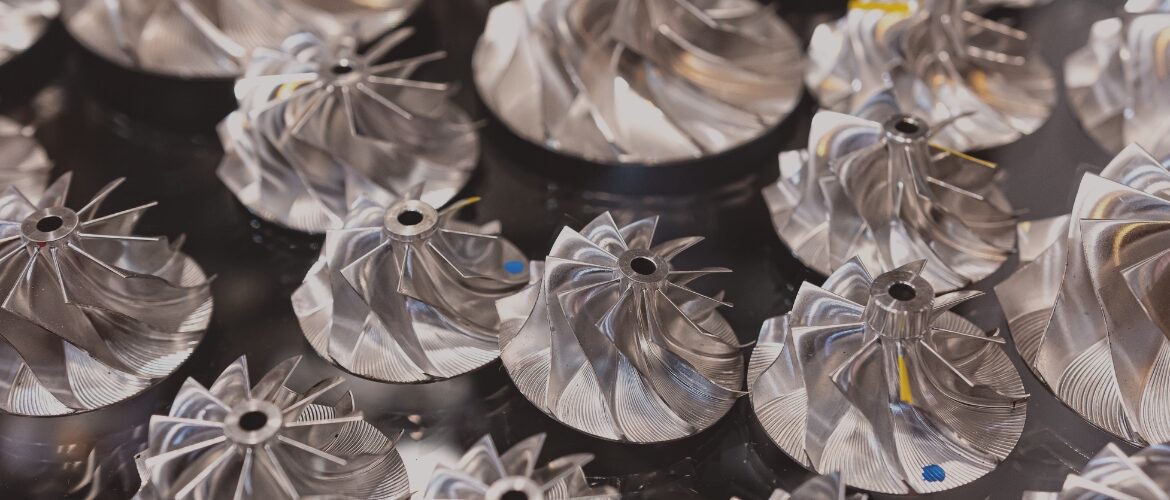
- Surface: ceramic shell surface transfers its smooth finish directly to the casting - Ra 1.6–6.3 µm as-cast.
- Dimensional accuracy: wax die produced to tight tolerances; ceramic shell dimensional stability is high - ±0.1–0.3 mm achievable.
- Complexity: virtually unlimited geometric complexity including undercuts, thin walls, internal passages, and complex 3D curves.
Sand Casting:
- Pattern: wooden, plastic, or metal pattern pressed into sand to create a mold cavity - pattern is reusable but mold is expendable.
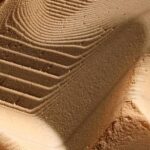
- Mold: bonded sand mold with coarser surface texture that transfers to the casting surface - Ra 12.5–50 µm as-cast.
- Surface: sand grain texture on casting surface; significant post-cast machining often needed for mating faces.
- Dimensional accuracy: sand mold swells, shifts, and distorts - typical tolerance ±0.5–1.5 mm; tighter requires expensive tooling.
- Complexity: limited by need to extract pattern from sand - undercuts require cores, increasing cost significantly.
Dimensional Tolerance Comparison
Dimensional tolerance is typically the first technical parameter that determines whether investment casting vs sand casting is the correct choice. Investment casting consistently achieves significantly tighter tolerances, reducing or eliminating secondary machining:
- Investment casting linear tolerance: ±0.1–0.3 mm on dimensions up to 25 mm; ±0.3–0.5 mm on dimensions to 150 mm (CT4–CT6 per ISO 8062).
- Sand casting linear tolerance: ±0.5–1.5 mm on dimensions to 25 mm; ±1.0–3.0 mm on dimensions to 150 mm (CT8–CT12 per ISO 8062).
- Flatness and form: investment casting holds Ra 1.6–6.3 µm and flatness ±0.1 mm on small faces; sand casting requires machining to achieve equivalent.
- Weight consistency: investment castings show ±1–2% weight variation batch-to-batch; sand castings ±5–10% due to mold variation.
For aerospace and medical components where fit, function, and weight are critical, investment casting’s tolerance advantage directly reduces per-part cost when total machining is accounted for – even though the casting price per kg may be higher than sand casting.
Surface Finish Comparison
Surface finish is the most immediately visible difference between investment casting and sand casting. The ceramic shell in investment casting faithfully replicates the smooth wax pattern surface, producing an as-cast finish that frequently requires no further treatment for non-mating surfaces:
- Investment casting as-cast finish: Ra 1.6–6.3 µm - equivalent to a machined surface on many non-critical features; no machining required for most surfaces.
- Sand casting as-cast finish: Ra 12.5–50 µm - rough, grainy texture requiring machining, grinding, or shot blasting for any functional surface.
- Impact on cost: investment casting eliminates 60–80% of machining operations needed for equivalent sand cast components in precision applications.
- Impact on fatigue life: smoother surface finish in investment casting significantly improves fatigue life - critical for aerospace structural and rotating components.
Tooling Cost Comparison
Tooling cost is often cited as investment casting’s main disadvantage versus sand casting – but this comparison requires careful analysis:
- Investment casting tooling cost: ₹3–20 lakhs for a typical wax injection die depending on complexity; amortised over production volume.
- Sand casting pattern cost: ₹0.5–5 lakhs for wood/metal pattern depending on size; lower upfront but with higher per-part cost.
- Prototype alternative: 3D-printed wax patterns eliminate investment casting tooling cost entirely for development quantities - enabling prototype casting with zero die investment.
- Total cost of ownership: for any production run >100 pieces, investment casting tooling cost is recovered through per-part savings from reduced machining and better yields.
The correct comparison is not tooling cost alone – it is total landed cost per part including casting, machining, NDT, and scrap over the production lifetime. On this basis, investment casting is more economical than sand casting for complex, tight-tolerance components above 50–100 pieces.
Alloy and Material Comparison
Both processes can cast a wide range of alloys, but investment casting has a significantly broader alloy capability – particularly for reactive, high-temperature, and difficult-to-machine materials:
- Investment casting alloy range: virtually unlimited - carbon steel, alloy steel, stainless (all grades), duplex, super-duplex, Inconel, Waspaloy, titanium, cobalt alloys, aluminium alloys.
- Sand casting alloy range: carbon steel, grey and ductile iron, aluminium alloys, brass/bronze - reactive alloys like titanium and nickel superalloys are extremely difficult in sand.
- High-temperature alloys: nickel superalloys (IN713, MarM247, Inconel 718) are only commercially castable by investment casting - sand casting cannot achieve the required mold stability.
- Reactive alloys: titanium investment casting requires vacuum induction melting and graphite or ceramic molds - sand casting is not viable for Ti-6Al-4V aerospace components.
When to Choose Investment Casting vs Sand Casting
The correct process for your component depends on the combination of geometric complexity, required tolerance, production volume, alloy, and total cost. Use this decision guide:
Choose Investment Casting When:
- Part size: component is very large (>50 kg) - investment casting becomes uneconomical above this weight.
- Surface finish: Ra 12.5 µm or worse is acceptable and machining is already planned for all functional surfaces.
- Alloy: component is grey iron, ductile iron, or large-section carbon steel where alloy constraints permit.
- Volume: production volume is very low (<10 pieces) and tooling amortisation is not feasible.
- Tolerance: ±1.5 mm or worse is acceptable for all dimensions.
Summary: Investment Casting vs Sand Casting
Investment casting delivers superior dimensional accuracy (±0.1–0.3 mm), dramatically better surface finish (Ra 1.6 µm vs 25 µm), broader alloy capability, and reduced total machining cost for complex precision components. Sand casting offers lower upfront tooling cost and suits large, simple, coarser-tolerance components in iron and standard steel alloys.
For aerospace, defence, medical, space, and high-performance industrial applications – where precision, alloy capability, and surface integrity are non-negotiable – investment casting is the correct process. For structural engineering applications with large, simple geometries and relaxed tolerances, sand casting is a cost-effective choice.
Frequently Asked Questions
Investment casting uses a ceramic mold from a wax pattern for Ra 1.6 µm surface finish and ±0.1 mm tolerance. Sand casting uses sand molds achieving Ra 25 µm and ±1.5 mm tolerance only.
Investment casting is significantly more accurate, achieving ±0.1–0.3 mm dimensional tolerance versus sand casting’s ±0.5–1.5 mm. Investment casting also delivers 5–10× better surface finish, reducing or eliminating machining requirements.
Investment casting has higher tooling cost but lower total part cost for complex precision components. Reduced machining, better yields, and tighter tolerances make investment casting more economical above approximately 100 pieces.
No. Sand casting achieves Ra 12.5–50 µm as-cast versus investment casting’s Ra 1.6–6.3 µm. Achieving investment casting surface finish from sand casting requires expensive machining, grinding, and polishing operations.
Nickel superalloys (Inconel, IN713, MarM247), titanium alloys (Ti-6Al-4V), and cobalt alloys cannot be commercially sand cast but are routinely produced by investment casting using vacuum melting and ceramic molds.
Investment casting tooling is typically justified from 50–100 pieces upward, where tooling cost is recovered through per-part savings. Prototype investment casting using 3D-printed wax patterns eliminates tooling cost entirely for lower volumes.
Choose sand casting for very large components (>50 kg), grey or ductile iron alloys, low production volumes (<10 pieces), or when dimensional tolerance of ±1.5 mm and rough surface finish are acceptable.
Unsure whether investment casting or sand casting is right for your component?
Uni Tritech’s engineers provide free process selection advice. Contact us with your drawing – we’ll recommend the optimum process.