HIP (Hot Isostatic Pressing) for Castings: Benefits, Process & Applications
HIP hot isostatic pressing casting is one of the most powerful post-processing technologies available to aerospace investment casting manufacturers — eliminating internal porosity, improving mechanical properties, and dramatically extending fatigue life of critical rotating and structural components. For aerospace, defence, and medical applications where casting integrity is non-negotiable, HIP is increasingly a specification requirement rather than an optional upgrade.
At Uni Tritech — India’s NADCAP-certified investment casting foundry — HIP is applied to qualifying aerospace castings under our NADCAP Heat Treatment accreditation. This guide explains exactly what HIP hot isostatic pressing does, how the process works, which castings benefit most, and what the quantified improvements look like for aerospace-grade materials.
What is HIP Hot Isostatic Pressing for Castings?
Hot Isostatic Pressing (HIP) is a manufacturing process in which a casting is subjected to simultaneous high temperature and high isostatic pressure in an inert gas atmosphere — typically argon — for a defined time cycle. The combination of heat and pressure causes internal pores and micro-shrinkage voids to close by plastic flow, creep, and solid-state diffusion bonding — eliminating them permanently without affecting the external geometry of the casting.
HIP hot isostatic pressing casting is not a surface treatment — it works throughout the entire cross-section of the casting simultaneously. A single HIP cycle can transform a casting with Category 3 internal porosity into a Category 0 casting — fully dense and equivalent in internal soundness to a forging — while maintaining the geometric complexity advantage of investment casting.
HIP Process Parameters for Aerospace Castings
HIP cycles for aerospace castings are defined by temperature, pressure, time, and atmosphere — all specified in customer engineering standards or industry specifications such as AMS 2801 and ASTM F2924:
Standard HIP Cycles by Alloy:
- Nickel superalloys (Inconel 718): HIP at 1165°C / 170 MPa / 4 hours in argon atmosphere — ASTM AMS 2801 Inconel standard cycle.
- Titanium alloys (Ti-6Al-4V): HIP at 900°C / 100 MPa / 2 hours in argon — AMS 2801 titanium cycle for medical and aerospace castings.
- Cobalt-chromium alloys: HIP at 1220°C / 100 MPa / 4 hours — commonly specified for orthopaedic implant cobalt castings per ASTM F75.
- Aluminium alloys (A356): HIP at 510°C / 100 MPa / 3 hours — particularly effective for aerospace aluminium investment castings.
- Stainless steel (316L, 17-4PH): HIP at 1120°C / 100 MPa / 4 hours — used for complex valve and medical device castings.
HIP Equipment Parameters:
- Maximum pressure: up to 200 MPa (approximately 2000 atmospheres) — applied uniformly in all directions (isostatically).
- Maximum temperature: up to 1250°C for most aerospace superalloys — controlled to ±5°C throughout the cycle.
- Atmosphere: 99.999% pure argon inert gas — prevents oxidation of the casting during high-temperature exposure.
- Cycle control: temperature and pressure are ramped up simultaneously, held for the specified dwell time, and cooled under controlled conditions.
Benefits of HIP for Investment Castings
The benefits of HIP hot isostatic pressing casting for aerospace and medical investment castings are well-documented and quantified in decades of industry testing data. Engineers specify HIP hot isostatic pressing casting when fatigue life, structural integrity, and porosity elimination are critical performance requirements.
Primary HIP Benefits:
- Porosity elimination: HIP closes 95–100% of internal micro-shrinkage and gas porosity — converting Category 3 castings to Category 0.
- Fatigue life improvement: HIP typically improves high-cycle fatigue (HCF) life by 40–100% in nickel superalloy and titanium castings by removing pore-nucleated crack initiation sites.
- Tensile property improvement: HIP improves elongation and reduction of area in cast alloys — approaching wrought property equivalence for many alloys.
- Creep resistance: denser microstructure after HIP provides improved creep rupture life at elevated temperature — critical for turbine components.
- Consistency improvement: HIP eliminates batch-to-batch variability in porosity level — providing consistent, predictable mechanical properties across production lots.
Quantified HIP Benefits (Inconel 718 Example):
- As-cast HCF life: approximately 10⁶ cycles at 700 MPa stress amplitude (scatter band 0.5–2×10⁶).
- After HIP HCF life: approximately 2×10⁶ cycles at 700 MPa (scatter band 1.5–3×10⁶) — approximately 2× improvement, reduced scatter.
- Elongation improvement: as-cast 8–12% elongation; after HIP 15–20% elongation — approaching wrought IN718 specification of 12% minimum.
- Radiographic improvement: casting rejected at Category 3 before HIP consistently achieves Category 0 after HIP for micro-shrinkage defects.
When is HIP Specified for Aerospace Castings?
HIP hot isostatic pressing casting is increasingly a mandatory specification requirement for aerospace and defence castings rather than an optional post-process. Modern aerospace programmes often require HIP hot isostatic pressing casting to achieve the density and reliability standards expected for safety-critical components. Understanding when HIP is required helps engineers write correct procurement specifications:
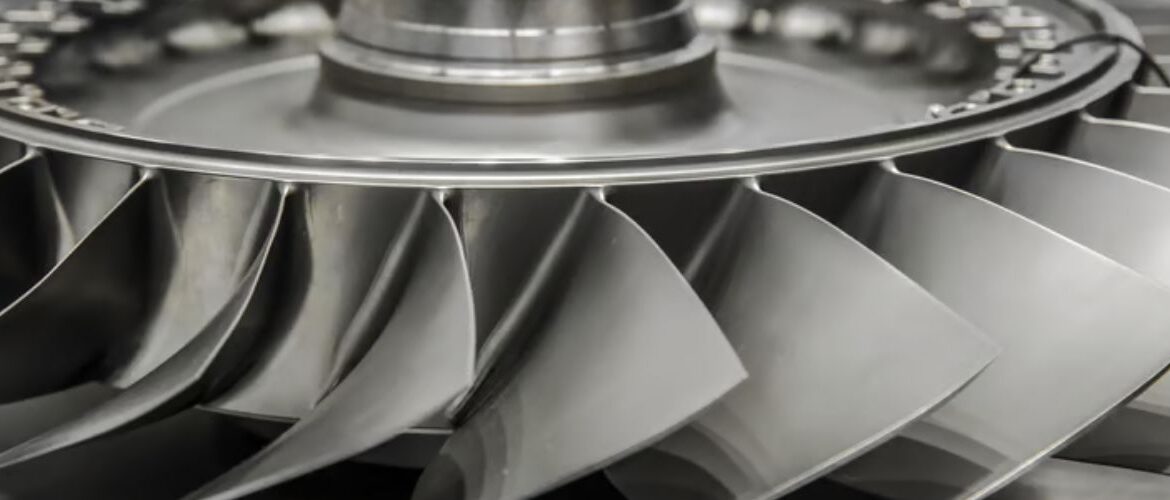
- Rotating components: turbine blades, compressor wheels, turbopump impellers — any rotating casting where fatigue failure means loss of aircraft. HIP is standard.
- Fracture-critical applications: landing gear, primary structure, pressure vessel components — where subsurface pores are not tolerable regardless of radiographic category.
- Pressure-retaining components: hydraulic manifolds, fuel system castings, pneumatic valves — where internal leakage from interconnected porosity is a functional failure.
- Medical implants: cobalt-chrome and titanium implants where full density is required for biocompatibility testing and long-term mechanical reliability.
- When radiographic inspection shows borderline results: castings that pass X-ray at Category 2 or 3 acceptance may be HIPped to achieve Category 0 and avoid scrap loss.
NADCAP HIP Requirements for Aerospace Castings
NADCAP accreditation for Heat Treatment covers HIP processes at qualified facilities. When an aerospace prime contractor specifies NADCAP-accredited HIP, the HIP service provider’s procedures, equipment calibration, cycle records, and documentation must meet NADCAP audit requirements — the same rigour applied to all aerospace special processes.
- Calibration: HIP autoclave temperature and pressure measurement systems calibrated to traceable standards per AMS 2750 pyrometry requirements.
- Procedure qualification: HIP cycle procedures written, reviewed by metallurgical authority, and qualified on representative test material before production use.
- Cycle records: time, temperature, and pressure records for every HIP cycle maintained and supplied with casting certification documents.
- Post-HIP inspection: castings are radiographically re-inspected after HIP to verify porosity elimination — and FPI re-performed to check surface condition.
HIP vs Non-HIP Castings: Should You Specify HIP?
The decision to specify HIP hot isostatic pressing casting involves cost versus risk trade-off. HIP adds 15–25% to casting cost but provides significant insurance against field failures in safety-critical applications. The return on investment calculation depends on the cost of in-service failure — which for aerospace rotating parts vastly exceeds the cost of HIP:
- Specify HIP for: all rotating components; fracture-critical structural castings; pressure-retaining parts; medical implants; castings with HCF loading.
- HIP optional for: non-fracture-critical structural castings with static loading; industrial components where Category 2 radiographic acceptance is adequate.
- HIP not required for: thick-section, low-stress static castings; large sand castings; components where porosity has been shown by analysis not to affect fatigue life.
Why Aerospace Manufacturers Choose HIP Hot Isostatic Pressing Casting
HIP hot isostatic pressing casting has become a preferred post-processing method for aerospace manufacturers seeking maximum casting density, improved fatigue resistance, and superior structural reliability. By eliminating internal porosity and reducing variability in mechanical properties, HIP hot isostatic pressing casting helps ensure consistent performance in demanding aerospace, defence, and medical applications.
Frequently Asked Questions
HIP applies simultaneous high temperature (up to 1200°C) and pressure (up to 200 MPa) in argon to close internal porosity by solid-state diffusion — producing fully dense castings with fatigue life approaching forged component performance.
HIP eliminates micro-shrinkage porosity and gas porosity from investment castings. It cannot close defects open to the surface, remove inclusions, or repair cracks. X-ray and FPI inspection should be performed both before and after HIP.
HIP typically improves high-cycle fatigue life by 40–100% in nickel superalloy and titanium aerospace castings. Porosity acts as a crack initiation site — eliminating porosity by HIP removes the dominant fatigue failure mechanism.
Yes. Most aerospace prime contractors require NADCAP-accredited HIP service for special process qualification. NADCAP HIP audit verifies equipment calibration, cycle procedures, records, and traceability — ensuring consistent, repeatable HIP quality for aerospace castings.
The standard HIP cycle for Inconel 718 aerospace castings per AMS 2801 is 1165°C, 170 MPa, 4 hours in argon atmosphere. This cycle eliminates micro-shrinkage porosity and improves elongation toward wrought IN718 specification.
HIP is applicable to nickel superalloys, titanium alloys, cobalt-chrome, stainless steels, and aluminium alloys. Each alloy has a specific HIP cycle temperature and pressure. Some free-machining or low-melting alloys may not be suitable.
Yes. Uni Tritech processes qualifying aerospace castings through NADCAP Heat Treatment-accredited HIP, providing full cycle records, post-HIP radiographic inspection, and certification documentation aligned to aerospace prime contractor and NADCAP requirements.
Need HIP hot isostatic pressing for your aerospace investment castings? Uni Tritech delivers NADCAP-accredited HIP with full documentation. Contact us for HIP cycle recommendation and casting qualification support.