

Design for Investment Casting (DFM): Tips to Reduce Cost and Lead Time
Design for investment casting (DFM) is the single most powerful lever engineers have to reduce component cost, compress lead time, and eliminate defects before a single wax pattern is ever produced. Poor DFM decisions made at the design stage are responsible for the majority of first-article failures, unnecessary tooling iterations, and excess scrap at investment casting foundries worldwide.
At Uni Tritech — India’s NADCAP-certified investment casting manufacturer supplying Airbus, Safran, HAL, and ISRO — our engineers review hundreds of component CADs each year. This guide distills the most impactful design for investment casting rules our team applies to help customers achieve right-first-time castings, lower per-part cost, and shorter time-to-production.
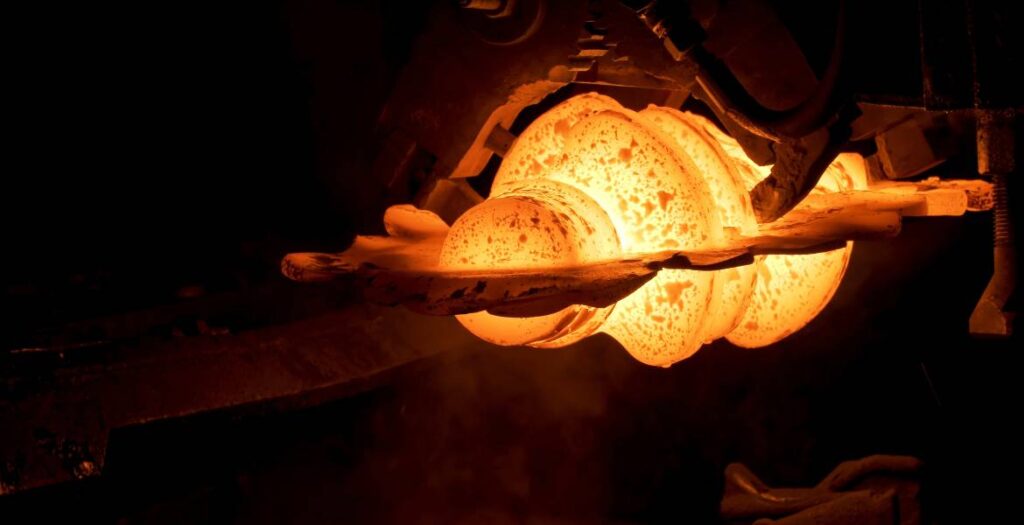
Understanding Design for Investment Casting (DFM)
Design for investment casting is the practice of engineering a component’s geometry to be optimally producible by the investment casting process — minimising tooling complexity, reducing defect risk, and achieving the tightest tolerances the process can deliver. Unlike machining, where almost any geometry can be produced given enough time and cost, investment casting has specific geometric rules that, when followed, unlock its full advantages.
Investment casting’s core strength is producing complex near-net-shape parts with excellent surface finish (Ra 1.6–6.3 µm) and dimensional tolerances of ±0.1–0.25 mm — but only if the part is designed correctly. A component that ignores DFM principles will suffer from shrinkage porosity, cold shuts, dimensional deviation, and difficult-to-fill thin sections that compromise quality and inflate cost.
The investment casting DFM rules below are not constraints — they are the design language of a process that has produced aerospace turbine blades, surgical implants, and rocket engine components for decades. Master them and your casting is optimised before it reaches the foundry.
Wall Thickness: The Most Critical DFM Variable
Wall thickness uniformity is the most important single factor in design for investment casting. Rapid changes in cross-section create differential solidification rates — thicker sections remain liquid longer, pulling metal from adjacent thin sections as they contract, causing shrinkage porosity that is invisible externally but catastrophic to structural integrity.
Investment Casting Wall Thickness Guidelines:
- Aluminium alloys (A356, A357): minimum wall thickness 1.5 mm; preferred 2.5–4 mm.
- Carbon & alloy steels: minimum 2.5 mm; preferred 3.5–5 mm.
- Stainless steels (304, 316L, duplex): minimum 2.0 mm; preferred 3.0–5.0 mm.
- Nickel superalloys (Inconel, IN713): minimum 1.0 mm achievable; preferred 1.5–3.5 mm.
- Titanium alloys (Ti-6Al-4V): minimum 1.5 mm; preferred 2.5–4.0 mm.
Where wall thickness changes are unavoidable, transition gradually — a taper of 3:1 maximum over an adequate length prevents hot-spot formation. Abrupt steps create isolated thick sections that inevitably suffer shrinkage unless risers are added (increasing cost and post-cast machining).
Fillet Radii: Eliminating Stress Concentrations
Sharp internal corners are among the most common and costly design for investment casting mistakes. Sharp corners create stress concentrations in service, promote ceramic shell cracking during dewaxing, and cause cold metal flow problems during pouring. The fix is simple: specify generous fillet radii at every internal corner.
Fillet Radius Rules for Investment Casting:
- Minimum internal fillet radius: 0.8 mm for non-critical surfaces; 1.5 mm preferred for structural components.
- External corner radii: 0.5 mm minimum to prevent ceramic shell damage during knockout.
- Junction fillets (rib-to-wall): fillet radius should equal at least 50% of the thinner wall thickness.
- High-stress components: use fillet radii of 3–5 mm minimum at stress-critical locations per FEA results.
Larger fillets also improve metal flow, reduce turbulence during pouring, and minimise oxide entrapment in the casting — all contributing to a cleaner, more consistent investment casting result.
Draft Angles and Parting Line Selection
Draft Angle Guidelines:
- Standard draft angle: 0.5–2° on all surfaces perpendicular to the die parting line; prefer 1° minimum.
- Deep pockets and blind holes: increase draft to 2–3° minimum to avoid wax tearing on ejection.
- Highly polished die surfaces: 0.25° draft is achievable with tool steel dies and precision polishing.
- Parting line placement: locate at the largest cross-section to minimise undercuts and reduce die complexity.
Incorrect parting line selection is the most expensive DFM error — it can force split-die or multi-piece tooling that costs 3–5× more than a simple two-piece die. Always confirm parting line with your foundry’s DFM engineer before die design begins.
Rib, Boss, and Feature Design for Minimum Defects
Ribs and bosses are the structural workhorses of cast component design — but poorly proportioned features are a leading cause of shrinkage defects and increased scrap in investment casting. DFM casting tips for ribs and bosses follow these proportions:
Rib Design Rules:
- Rib height-to-thickness ratio: maximum 5:1 to prevent solidification shrinkage at rib root junction.
- Rib thickness: should not exceed 75% of the wall thickness to which it connects.
- Rib spacing: minimum spacing equal to 3× rib thickness to allow ceramic shell penetration and metal flow.
Boss Design Rules:
- Boss height-to-diameter ratio: maximum 2:1 to avoid isolated hot spots and shrinkage voids.
- Boss coring: always core bosses requiring precision bores — cast cores are more accurate than post-cast drilling in thin bosses.
- Boss location: avoid positioning bosses directly opposite each other across thin walls — this creates guaranteed shrinkage.
Tolerances and Machining Allowances in Investment Casting DFM
One of the most common DFM mistakes is applying machining drawing tolerances to investment cast features that do not require machining. Investment casting naturally achieves ±0.1–0.3 mm on non-critical features — specifying unnecessarily tight tolerances on every dimension increases cost without adding value.
Investment Casting DFM Tolerance Strategy:
- Identify truly critical dimensions: apply tight tolerances only to interfaces, sealing faces, and functional datum surfaces.
- Leave casting surfaces as-cast wherever possible: Ra 1.6–6.3 µm as-cast surface eliminates polishing and machining cost.
- Specify machining allowances correctly: 1.5–3.0 mm stock allowance on machined faces for steel; 1.0–2.0 mm for aluminium.
- Use GD&T functional tolerancing: geometric tolerances on function, not assumed symmetry — reduces inspection failure rates.
- Discuss tolerance achievability before drawing issue: confirm with your foundry which tolerances require secondary machining to achieve.
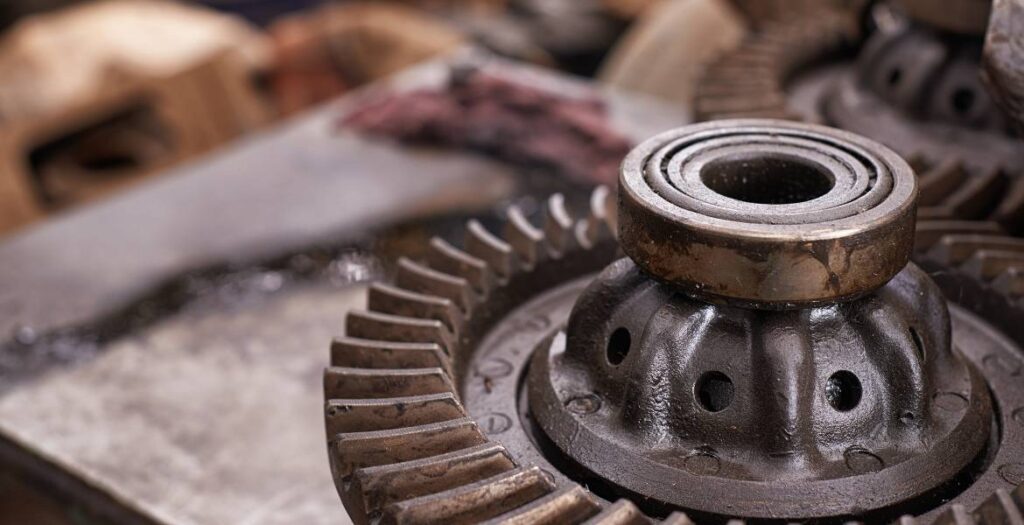
Core Limitations and Internal Features
Investment casting can produce internal features and passages that are impossible or prohibitively expensive by machining. However, ceramic cores used to form internal passages have their own DFM constraints that must be respected in casting design guidelines:
- Minimum core diameter: ceramic cores are limited to approximately 3 mm minimum diameter; below this, fragility causes breakage and inclusion defects.
- Core length-to-diameter ratio: maximum 10:1 for ceramic cores without core print support; longer cores bow and cause dimensional deviation.
- Core clearance: maintain minimum 2 mm wall between internal core and external surface to prevent metal breakthrough.
- Core anchoring: always specify core prints — points where the ceramic core contacts the mold wall to prevent core shift during casting.
For complex internal passages in turbine blades or medical implants, discuss core design with Uni Tritech’s engineering team early in development — our NADCAP-certified process has successfully produced single-crystal blades with cooling holes less than 1.0 mm diameter.
DFM Checklist: Before You Release Your Investment Casting Drawing
Apply this design for investment casting DFM checklist before releasing drawings to your foundry supplier to avoid costly revisions and re-tooling:
- Wall thickness review: confirm all walls are within alloy-specific minimum/preferred range; flag all thickness steps >2:1.
- Fillet radius audit: verify all internal corners have minimum 0.8 mm radius; critical locations have ≥1.5 mm.
- Draft angle confirmation: every surface has minimum 0.5° draft; parting line is confirmed with foundry engineer.
- Feature proportion check: all ribs ≤5:1 H/T; all bosses ≤2:1 H/D; all core diameters ≥3 mm.
- Tolerance review: critical dimensions identified; non-critical features left at casting tolerance; machining allowances specified.
- Material and alloy specified: material designation, ASTM/AMS specification, and heat treatment condition confirmed on drawing.
- DFM review with foundry: drawing submitted to foundry DFM team for review and approval before tooling order is placed.
Frequently Asked Questions
Design for investment casting is engineering a component’s geometry to suit the lost-wax process — optimising wall thickness, fillets, draft angles, and tolerances to minimise cost, lead time, and defect risk.
Minimum wall thickness varies by alloy: aluminium 1.5 mm; stainless steel 2.0 mm; nickel superalloys 1.0 mm; titanium 1.5 mm. Preferred walls are thicker to prevent shrinkage and cold shut defects.
Investment casting wax dies require 0.5–2° draft on all surfaces perpendicular to the parting line. Deep pockets need 2–3° minimum. Insufficient draft causes wax pattern damage during ejection and increases tooling cost.
Medical grade castings manufacturers require ISO 13485:2016 medical device quality management certification demonstrating validated processes and quality systems. Additional certifications may include FDA registration, ISO 9001, and specific accreditations for special processes. Manufacturers must maintain medical device material requirements documentation and support regulatory submissions.
DFM casting tips — uniform wall thickness, correct fillets, proper draft, and near-net-shape features — reduce tooling complexity, scrap rate, post-cast machining, and first-article failure iterations, directly lowering total component cost.
Yes. Ceramic cores form internal passages in investment casting. Minimum core diameter is approximately 3 mm; maximum length-to-diameter ratio 10:1. Complex cooling passages in turbine blades are produced using this capability routinely.
Investment casting achieves ±0.1–0.3 mm on standard features and Ra 1.6–6.3 µm surface finish as-cast. Tighter tolerances require secondary machining. Apply tight tolerances only to functionally critical dimensions to control cost.
Yes – always. DFM review before tooling prevents costly die revisions, re-trials, and first-article failures. Uni Tritech offers complimentary DFM reviews for new customers before confirming tooling orders or prototype castings.
Ready to optimise your component for investment casting?
Uni Tritech‘s DFM engineers review your CAD free of charge. Contact us before you finalise your drawing — and save on tooling, scrap, and lead time.